
A masterwork of sacred architecture and calligraphy, this original painting draws from the golden age of Islamic manuscript...
Couldn't load pickup availability
Shipping Cost
Shipping is calculated at checkout based on your location.
Free shipping may apply to selected items or promotions.
Processing Time
Orders are processed and shipped within 3–5 business days after purchase.
Packaging
All artworks are professionally and securely packaged to ensure safe delivery.
Canvas artworks are shipped with protective materials suitable for fine art.
Tracking & Insurance
All orders are shipped with tracking.
Original artworks are fully insured during transit.
International Shipping
International shipping is available.
Shipping costs are calculated at checkout.
Please note that customs duties, taxes, or import fees (if applicable) are the buyer’s responsibility.
Delivery Time
Delivery times vary depending on destination and carrier. Estimated delivery times will be shown at checkout.
The item with the Committed label has a lower environmental impact because it was made with sustainable materials or methods. We are committed to creating items that combine sustainability with style. Made with recycled cashmere and industril by products.
We advise routinely dusting your items with a gentle cleanser to preserve


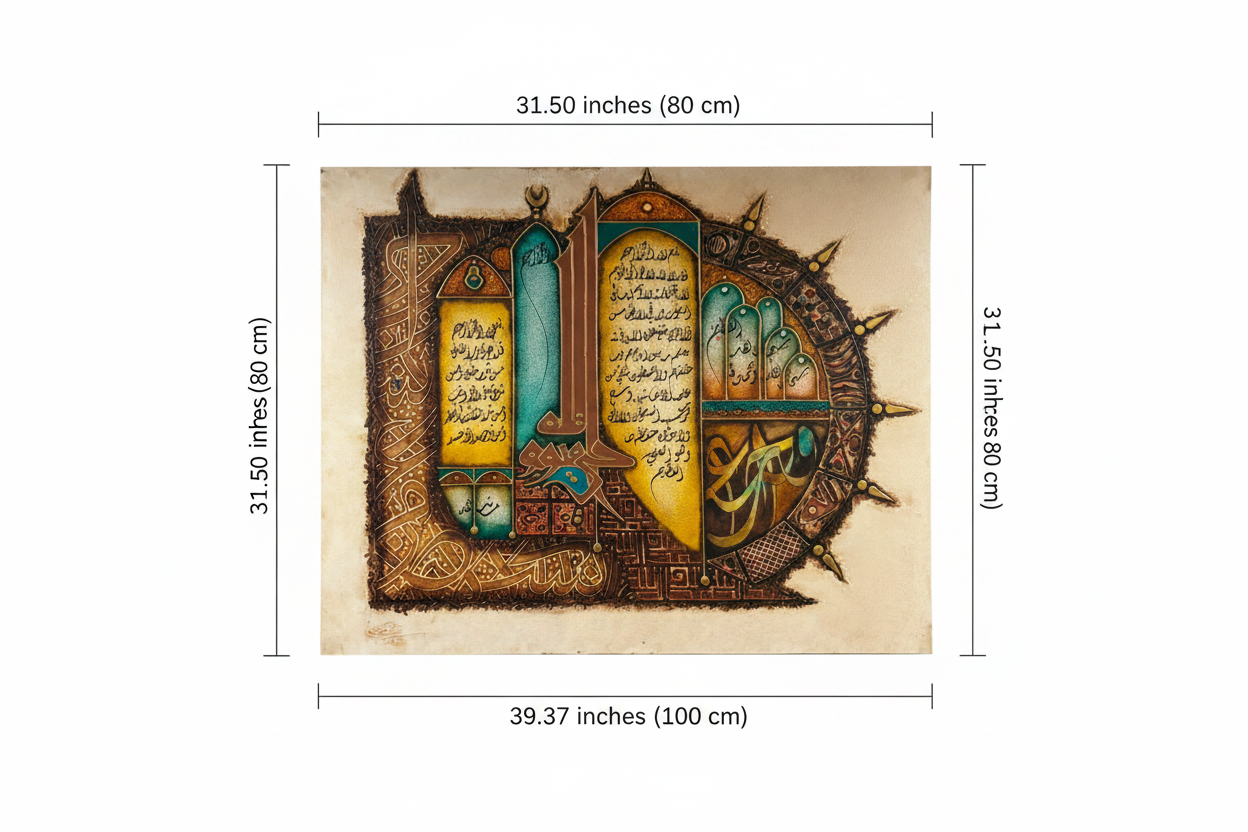
A masterwork of sacred architecture and calligraphy, this original painting draws from the golden age of Islamic manuscript illumination to create a composition of breathtaking complexity and beauty. Every inch of this canvas rewards close study — from the sweeping copper-brown geometric border with its raised texture, to the teal and yellow arch windows housing flowing Arabic calligraphy, to the magnificent circular medallion with its copper spike border and jewel-toned arch niches.
At the heart of the left panel, the monumental Arabic letter Ba — the opening letter of Bismillah Al-Rahman Al-Raheem — rises in rich copper, surrounded by a flowing golden calligraphy border. The central vertical panels, framed like the arched windows of a mosque, carry the sacred words of Ayat ul Kursi — the Throne Verse, the most powerful protective verse in the Quran. Below, large golden Arabic script and colorful ribbon calligraphy complete the composition with warmth and movement.
This is a piece that carries the weight of centuries of Islamic artistic tradition — and the intimacy of a single artist’s devotion.
The moment this canvas goes up on a wall, it changes the room. The architectural structure of the composition — the arched windows, the circular medallion, the raised copper border — gives it a three-dimensional presence that photographs cannot fully capture. In person, the texture of the border, the depth of the teal niches, and the warmth of the amber gold create an experience that is closer to standing inside a mosque than looking at a painting.
Ayat ul Kursi is recited for protection, blessing, and closeness to Allah. Having it rendered in this level of artistic grandeur makes this piece both a spiritual anchor and a visual centerpiece — the kind of art that defines a home.
Width: 39.37 inches (100 cm) | Height: 31.50 inches (80 cm)
Delivered frameless — gallery wrap canvas with finished edges, ready to hang directly on the wall. Each piece is individually handcrafted with fine detail work. Slight color variation may occur due to monitor calibration differences.


